
The pain that comes and goes is the crack.
When you bite down, the two sides of the fracture separate slightly — irritating the pulp (the nerve and blood vessel tissue inside your tooth). When you release the bite, the crack snaps back. That's where the sharp release pain comes from. Because the crack closes again, the tooth can feel completely normal moments later.
Over time, repeated movement damages the pulp beyond recovery. At that point the pain may become constant — or it may disappear entirely, which is not an improvement. A nerve that stops signalling pain has not healed. It has died.
Symptoms that suggest a crack:
- Sharp pain when biting down — particularly on release, when you stop chewing
- Sensitivity to hot or cold that lingers after the source is removed
- Pain that comes and goes, making it hard to pinpoint which tooth is responsible
- Discomfort that seems to shift or vary in intensity without obvious cause
- Spontaneous aching for no clear reason
Not all cracks are the same — and the type determines the treatment.
Some cracks need only a crown. Others need root canal treatment first. A small number cannot be saved. CBCT imaging tells us which category your tooth falls into — before any treatment begins.
Usually not an emergency. A cusp breaks off — the first sign is often a sharp edge your tongue keeps finding, or mild sensitivity on one side. The nerve is typically unaffected. This one needs a crown, not a root canal. Your dentist may handle it directly, or refer you for an assessment to confirm.
This is the one behind the on-and-off pain you've been trying to ignore. The crack runs toward the root and irritates the nerve every time you bite. The nerve is still alive — which means there is still time. A root canal removes the damaged tissue and a crown holds the tooth together, stopping the crack from spreading. The window to save this tooth is open. It will not stay open.
What a cracked tooth becomes when it is left too long. By this point the tooth has separated. We cannot save it whole. Sometimes we can still save enough of it to be functional — sometimes we cannot. CBCT tells us what we are working with before any decision is made.
The one patients find out about late. It starts in the root and works upward — often with no pain at all. By the time symptoms appear, the surrounding bone is usually already affected. Standard X-rays miss this almost every time. It is the reason we do not treat any crack without a CBCT scan first.
A cracked tooth cannot heal. It can only progress.
Unlike a broken bone, a crack in a tooth does not repair itself. Without treatment, it extends deeper — toward the root, into the pulp, eventually below the gum line to the point where extraction is the only option. A tooth that could have been saved with a root canal and a crown becomes a tooth that cannot be saved at all.
Most patients who delay do so because the pain comes and goes — it feels manageable. When the intermittent pain eventually disappears, it is tempting to think the problem has resolved. In many cases it means the opposite: the nerve has died. The infection that follows is not far behind.
If your tooth is giving you symptoms — even occasionally — have it evaluated. The window between we can save this tooth and we cannot closes faster than most patients expect.
Diagnosis first. Treatment only when we know exactly what we are dealing with.
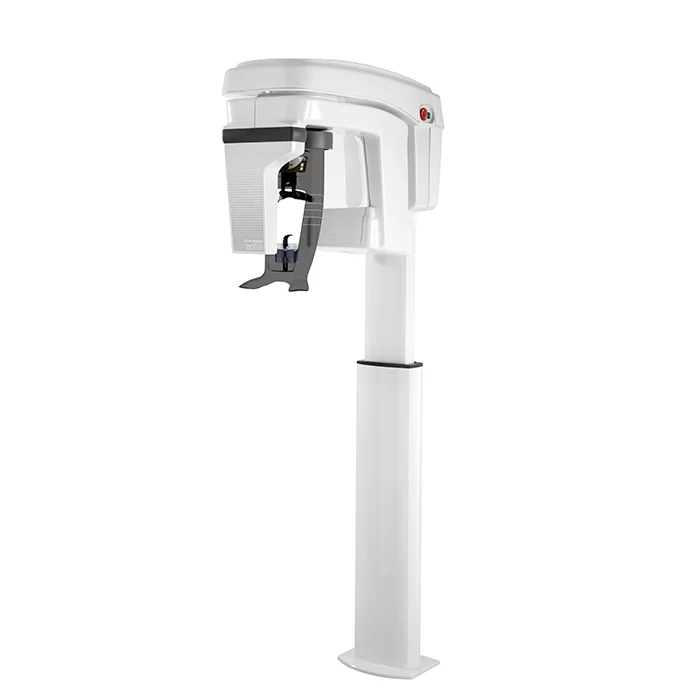
We do not treat a crack we have not fully imaged. CBCT comes first — so that every decision that follows is based on what is actually happening inside the tooth, not a best guess from a two-dimensional X-ray.
- 01 CBCT imaging — finding what a standard X-ray misses Standard dental X-rays cannot reliably detect cracks, particularly vertical root fractures and deep longitudinal fractures. A CBCT scan gives us a complete 3D picture from every angle — showing the extent, direction, and depth of the fracture, and whether the pulp is involved. This is the step that changes what is diagnosable.
- 02 Assessment — what type, and what it means for treatment After imaging, we assess the fracture type, how far it has progressed, and what the tooth needs. We will be direct with you about what we find. Some cracks need only a crown. Others need endodontic treatment first. A small number are beyond saving — and we will tell you that honestly too.
- 03 Root canal treatment — when the pulp is involved When the crack has reached the pulp, root canal treatment removes the damaged or infected tissue and seals the tooth against further bacterial entry. We use GentleWave's Multisonic Ultracleaning® technology — which cleans the full canal system, including anatomy that mechanical files cannot physically access.
- 04 Crown placement — with your referring dentist A crown is placed over the tooth after treatment to hold it together and prevent the crack from spreading further. Crown placement is completed by your dentist. We provide a full clinical report so they have everything they need.
For cases where root canal treatment is needed, we recommend GentleWave to every patient — and nearly all of them choose it. Learn why we chose GentleWave
"Dr. Priya O'Callaghan is an actual lifesaver — I work on cargo ships and was only in town for one day when I cracked my tooth open. She was able to prevent infection that could have been lethal."
What patients ask before they call.
- Does a cracked tooth always need a root canal?
- No. It depends on how far the crack has progressed. A fractured cusp that hasn't reached the pulp typically needs only a crown. A cracked tooth that has reached or damaged the pulp does require root canal treatment. A CBCT scan tells us exactly which situation you are in before any treatment begins.
- Can a cracked tooth heal on its own?
- No. Unlike a broken bone, a cracked tooth cannot repair itself. Without treatment, cracks only progress — deeper toward the root, into the pulp, and eventually to the point where the tooth cannot be saved. Earlier treatment is almost always simpler, faster, and more successful.
- My pain went away. Does that mean the problem resolved?
- Not necessarily — and this matters. When the intermittent pain from a cracked tooth disappears, it often means the nerve inside has become irreversibly damaged, not that the crack has healed. The tooth may feel better temporarily. The underlying problem has not gone away. We recommend having any crack evaluated even if symptoms seem to have settled.
- How do you find a crack that doesn't show on a regular X-ray?
- We use CBCT (Cone Beam Computed Tomography) imaging — a 3D scan that gives us a complete picture of the tooth from every angle. Vertical root fractures and deep cracks are frequently invisible on standard X-rays. CBCT is the diagnostic tool that changes what is findable.
- Is a cracked tooth a dental emergency?
- It can be. Severe pain, swelling, or pain that wakes you at night means you should call us today — we see emergency patients at all four locations, often the same day. If symptoms are mild or intermittent, you should still be evaluated soon. Cracks that seem manageable can progress faster than expected.
- Will my insurance cover cracked tooth treatment?
- Root canal treatment is generally covered by dental insurance, though patient portions vary by plan. We confirm your coverage before treatment begins so you know what to expect. No surprises.
If you think you have a crack, have it evaluated today.
Same-day access · Four East Bay locations · No referral required