
The tooth didn't fail. The anatomy was more complex than the first procedure could address.
Inside every tooth is a network of canals that branch, curve, and narrow — sometimes in ways that standard x-rays cannot fully reveal. Even a well-performed root canal can leave microscopic areas of anatomy unaddressed. Over time, bacteria can persist in those areas and cause the infection to return.
This is not a judgement of the original treatment. Root canal anatomy is among the most complex in the body. What CBCT imaging and GentleWave technology can now find and treat was simply not accessible with earlier methods.
Common reasons retreatment becomes necessary:
- Narrow or curved canals that were difficult to reach with the original instruments
- Complex anatomy — lateral canals, fins, accessory branches — that went undetected in the initial treatment
- A crown or restoration that was delayed or didn't seal completely, allowing bacteria back into the tooth
- New decay developing around the existing crown
- A crack or fracture in the crown that exposed the tooth to re-infection
Pain after a root canal is not something to wait out.
The following signs suggest your tooth may need to be re-evaluated. If any of these sound familiar, call us — a CBCT scan will tell us exactly what is happening inside the tooth.
- 01 Pain or sensitivity that never fully resolved after the original procedure
- 02 Aching or throbbing that has returned months or years later
- 03 Swelling near the tooth or along the gum
- 04 A small raised bump or discharge on the gum near the root — a sign of active infection
- 05 Discomfort or sensitivity when biting down on the tooth
- 06 Tenderness when pressing on the gum directly above or below the root
This is not a repeat of the same procedure. It's a more complete one.
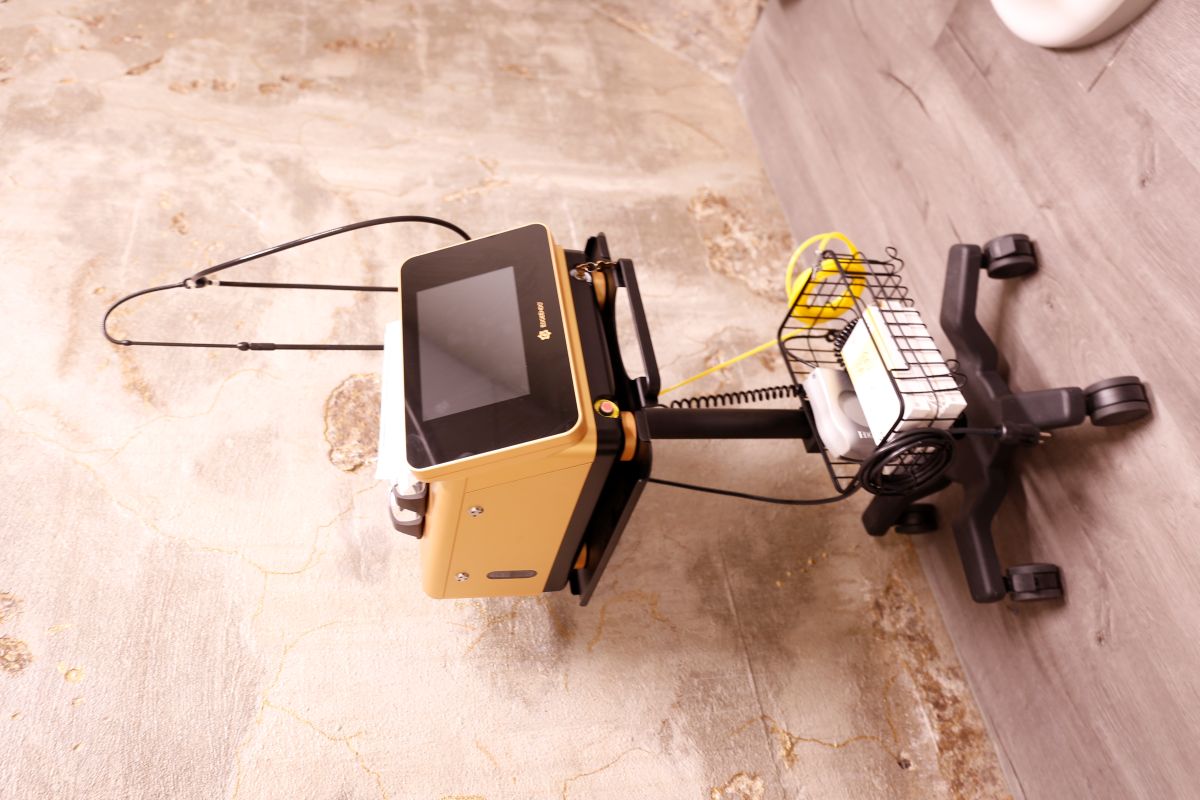
CBCT imaging and GentleWave's Multisonic Ultracleaning® reach what the original procedure could not. Here is what that looks like, step by step.
- 01 CBCT imaging — seeing what was missed Before anything else, we take a CBCT (Cone Beam Computed Tomography) scan. This gives us a full 3D view of the tooth — revealing canal anatomy, missed branches, and the source of infection that a standard x-ray cannot show.
- 02 Removing the previous filling material We carefully reopen the tooth and remove the existing root canal filling. This gives us clear access to examine every part of the canal system — including areas that may not have been fully addressed the first time.
- 03 GentleWave cleaning — reaching what was missed Using Multisonic Ultracleaning® technology, GentleWave flushes the entire canal system — including lateral canals, fins, and microscopic spaces that traditional instruments physically cannot reach. If missed anatomy was the reason the first treatment fell short, this is where retreatment at Endospecialists is different.
- 04 New fill and seal The cleaned canal system is filled with fresh biocompatible material and sealed. A temporary filling protects the tooth until your dentist places a new crown.
- 05 Return to your dentist We send a full clinical report to your dentist. They will place a new crown to restore the tooth to full function. The goal — as always — is to keep your natural tooth.
You can always extract a tooth. You cannot un-extract one.
When retreatment is recommended, some patients are also considering extraction as the simpler path. In most cases, it is not. Your natural tooth preserves the bone beneath it, provides natural biting force, and requires no surgical procedure to maintain. An implant involves surgery, months of healing, and considerably higher cost.
If retreatment doesn't succeed, extraction remains available. But trying to save the tooth first is almost always the right call — clinically and financially.
Success rate for nonsurgical retreatment performed by an endodontist specialist. We will give you an honest assessment of your tooth's prognosis before any treatment begins.
What patients ask before they call.
- Will retreatment hurt more than my first root canal?
- Not necessarily — and in many cases, less. The tooth is fully numbed before treatment begins. GentleWave's fluid-based cleaning is gentler on the tooth than mechanical filing. Most patients are surprised by how manageable the experience is.
- How long does retreatment take?
- Most retreatment cases are completed in one or two appointments of 60 to 90 minutes each. The complexity of the original anatomy and what was left behind can affect timing — your doctor will give you a clearer picture after the CBCT scan.
- How successful is retreatment?
- Nonsurgical retreatment performed by an endodontist carries a 70–85% success rate in peer-reviewed endodontic literature. Success depends on the cause of the original failure and the condition of the tooth. We will give you an honest assessment of your tooth's prognosis before any treatment begins.
- Is retreatment covered by insurance?
- Coverage varies by plan. Some dental insurance policies cover retreatment; others treat it differently from an initial procedure. We confirm your coverage before treatment begins — no surprises. HSA and FSA funds are accepted.
- Do I need a referral?
- No. You are welcome to contact us directly at any of our four East Bay locations. If you have been advised that extraction is your only option, we are happy to provide a second assessment — retreatment is often possible where others have concluded it is not.
- What if retreatment doesn't work?
- If nonsurgical retreatment is not successful, endodontic surgery — an apicoectomy — may be an option. This is a minor surgical procedure that addresses the root tip directly. Extraction remains available if needed. We will always be honest with you about your options at every stage.
Call us before you make any decision about your tooth.
Same-day access · Four East Bay locations · No referral required